 Services
 Roofing Projects in York
 Knowledge
 Contact
ROOF YORK
Roofing Guide for Homeowners
Practical advice on roof repairs, replacement, materials, costs and choosing a roofing contractor in York.
Practical advice on roof repairs, replacement, materials, costs and choosing a roofing contractor in York.
Most homeowners only need to think about their roof when something goes wrong.
A slipped slate, leaking chimney, failed flat roof or recurring damp patch can quickly raise a much bigger question: does the roof simply need repairing, or is more substantial work required?
This roofing guide explains the main systems found on homes across York and the surrounding villages, how common defects develop, what good repair work should involve, and some of the standards and regulations that may apply.
We also explain what to expect from a professional roofing contractor—from the initial inspection and quotation through to scaffolding, installation, completion and guarantees.
Get In Touch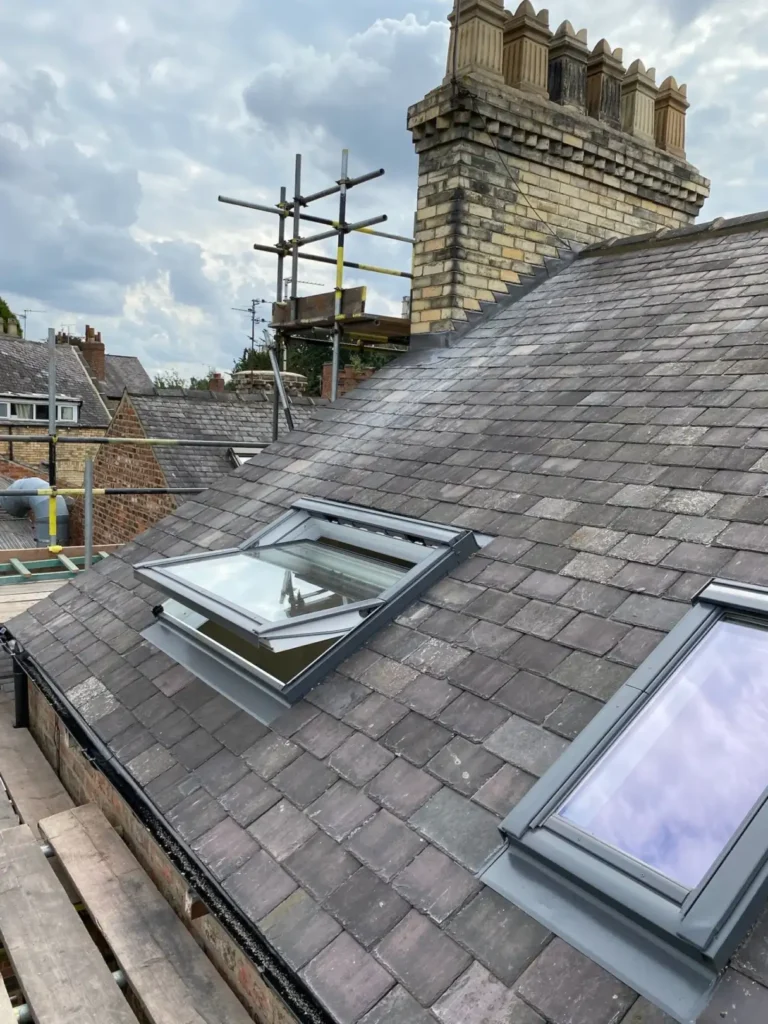
A good roofing decision starts with understanding the problem. Water can travel considerable distances through a roof construction before it becomes visible internally, meaning the position of a damp patch does not necessarily identify the source of a leak.
A proper inspection should consider the roof covering, battens and underlay where visible, valleys, ridges, verges, abutments, chimneys, leadwork, penetrations, rainwater goods and the condition of the supporting structure.
For pitched roofs, specification and installation should take account of the principles contained within BS 5534. Lead sheet detailing should follow BS 6915 and relevant industry guidance, while moisture management, ventilation and condensation risk should be considered in accordance with BS 5250.
The objective should not simply be to stop today’s leak. A good repair identifies why the defect occurred and provides an appropriate solution for the roof as a whole.
Get a Quote Roof Repairs All Roofing ServicesNot every roofing defect requires extensive work. Where a problem is localised and the surrounding roof remains serviceable, a carefully executed repair may provide many more years of useful life.
Where defects are widespread, however, repeated patch repairs can become poor value. The condition of the roof covering, underlay, battens, fixings, structural timber, insulation, ventilation and associated details should all be considered before recommending replacement.
A roofing inspection should seek to establish the cause of the defect, rather than simply treating its visible symptoms.
Typical areas requiring investigation include slipped or damaged slates and tiles, failed flashings, valleys, ridges, verges, chimney junctions, roof penetrations, defective underlay and rainwater disposal.
Localised damage to an otherwise serviceable roof can often be repaired effectively. Replacement becomes more appropriate where defects are widespread, components have reached the end of their serviceable life, or previous repairs have failed to address an underlying problem.
There is no single percentage or age at which every roof should automatically be replaced. The decision should be based upon its condition, construction and likely remaining service life.
Moisture management is an important part of roof design. Poor ventilation, discontinuous insulation, uncontrolled air leakage or an inappropriate roof build-up can contribute to condensation within the roof space or construction.
Roof work should therefore consider the complete build-up rather than simply replacing the external covering. Ventilation and condensation risk should be assessed with reference to BS 5250 and the particular construction of the property.
Flat roofs can be constructed using a range of systems including high-performance bituminous membranes, EPDM, GRP, single-ply and liquid-applied systems.
The suitability of each system depends upon the substrate, roof geometry, falls, outlets, upstands, penetrations and required finish. Correct detailing at edges and junctions is often as important as the waterproofing membrane itself.
Lead remains one of the most effective materials for weathering complex roof junctions when it is correctly specified and installed.
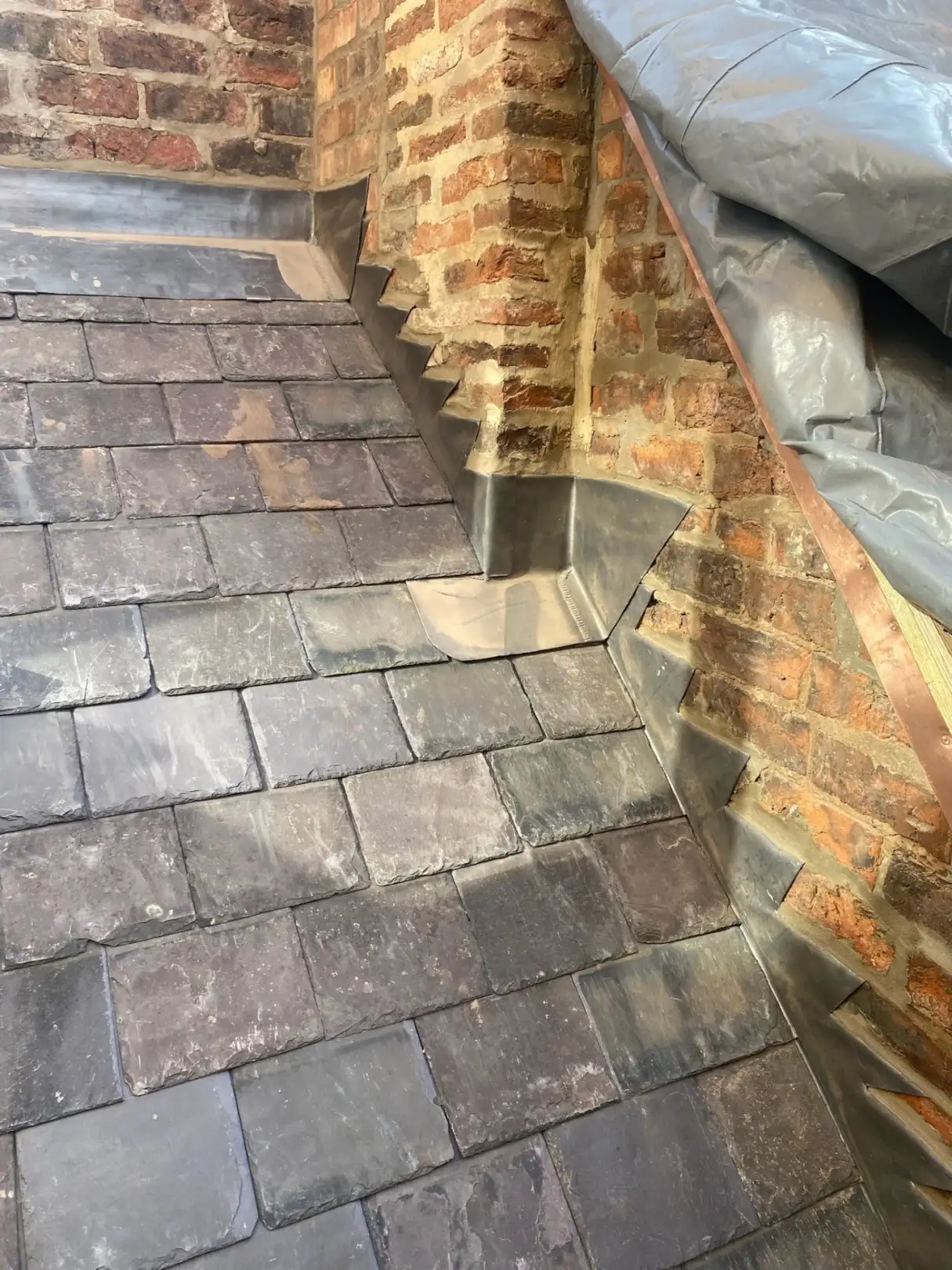
Typical details include stepped and cover flashings, soakers, aprons, back gutters, valleys and chimney trays. Correct lead code, sizing, laps, fixings and allowance for thermal movement are fundamental to long-term performance.
Chimney work may also involve repointing, rebuilding, flaunching, resetting chimney pots and providing suitable ventilation to redundant flues.
Safe access is an important part of professional roofing work. The appropriate solution will depend upon the height, roof configuration, duration of the work and nature of the task.
Scaffolding also provides a stable working platform, assists with material handling and allows many roofing details to be completed more safely and accurately than would be possible from ladders alone.
The programme should also make reasonable allowance for weather, material availability and unforeseen defects that may only become visible once the existing roof covering is opened up.
Clear advice before work begins.
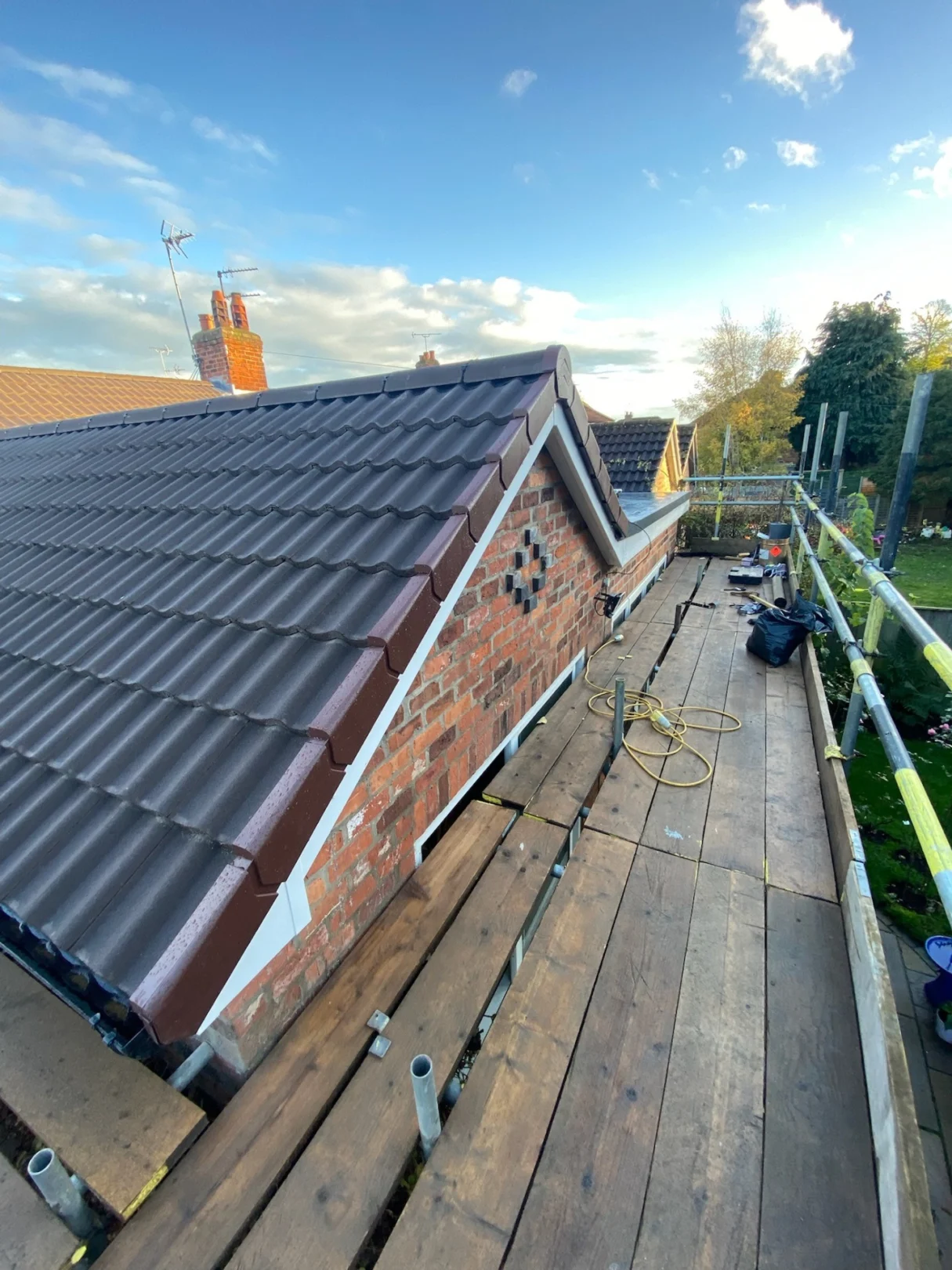
Roofing services across York and the surrounding villages.
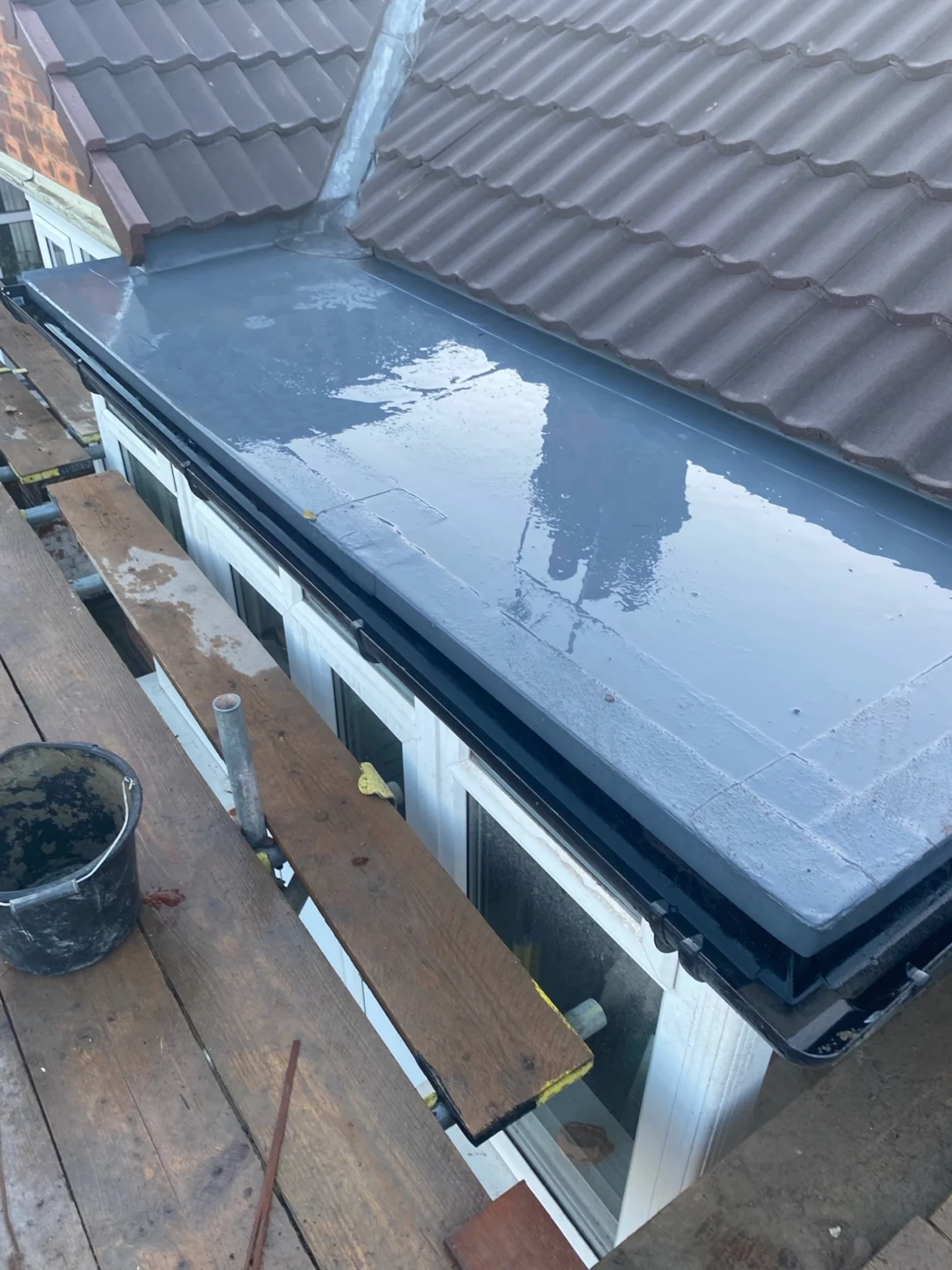
Roofing, leadwork and traditional detailing.
Every roof eventually requires maintenance. The important question is whether the defect is an isolated problem or evidence of wider deterioration.
A few slipped slates, a damaged tile, failed flashing or a localised chimney defect can often be addressed with a targeted roof repair.
Where leaks occur repeatedly across different areas, underlay has deteriorated extensively, battens or fixings are failing, or numerous previous repairs are evident, it may be sensible to investigate a more comprehensive roof replacement.
The age of a roof alone does not determine whether it needs replacing. Traditional natural slate and well-made clay tile roofs can remain serviceable for many decades, particularly where the covering can be carefully repaired and maintained.
Equally, a comparatively recent roof can perform poorly if its original specification or installation was defective.
Condition is more important than age. The correct approach is to inspect the roof, identify the cause and extent of deterioration, and compare the likely life and cost of repair against renewal.
Pitched roofs remain the predominant form of domestic roofing across York. Common coverings include natural slate, clay plain tiles, clay pantiles and concrete tiles.
The roof covering is only one part of the system. Performance also depends upon the battens, underlay, fixings, ventilation, insulation, structural timbers and details around chimneys, valleys, verges, ridges and abutments.
Individual slipped or broken coverings should be repaired promptly. A relatively small opening can allow significant quantities of wind-driven rain into the roof construction during severe weather.
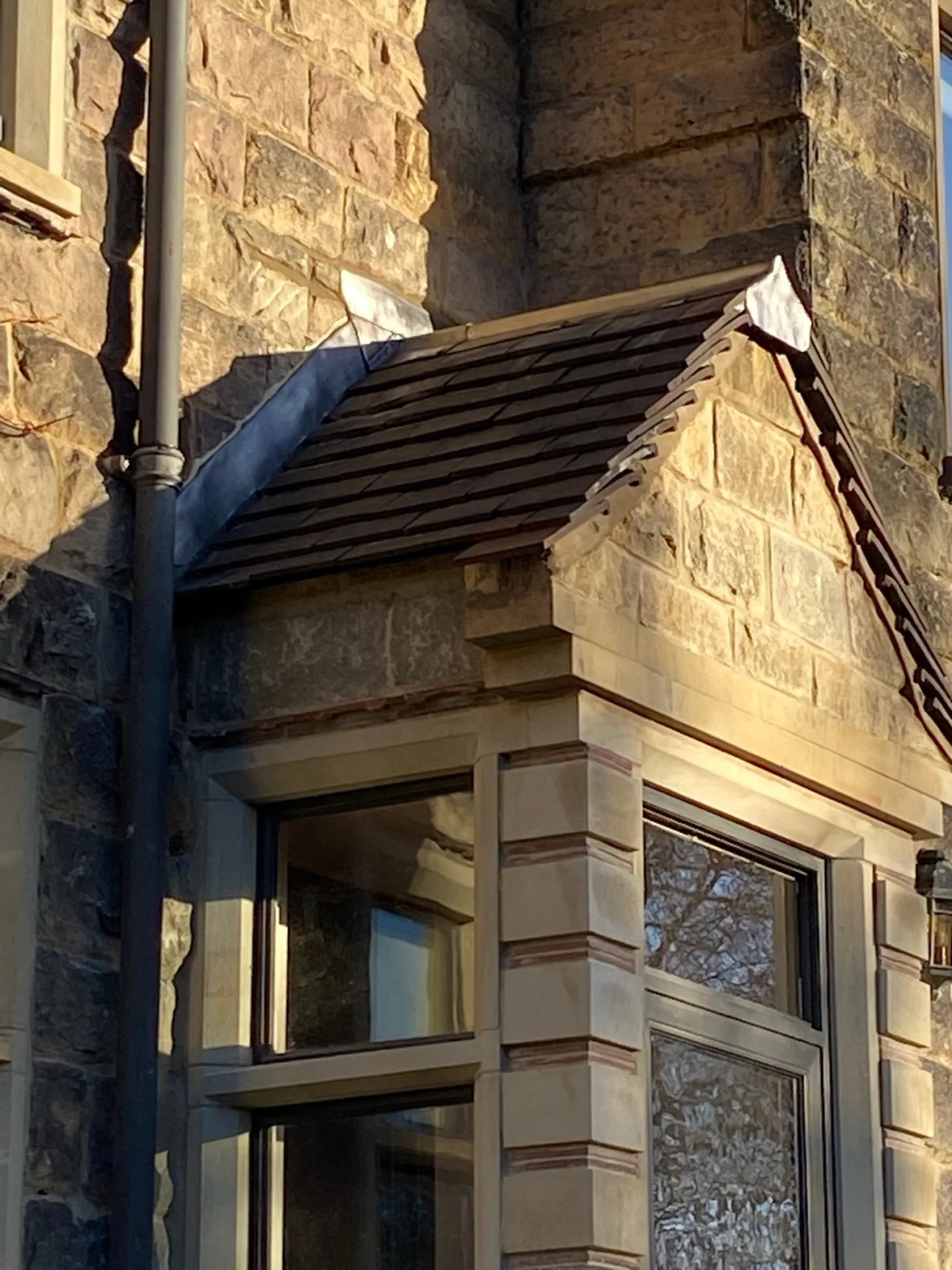
Flat and low-pitched roofs are common to extensions, garages, dormers, bay windows and later additions to properties throughout York.
Modern flat roofing should be considered as a complete system. Falls, drainage, insulation, vapour control, perimeter detailing and junctions with walls or pitched roofs all influence its performance.
Standing water, blocked outlets, failed perimeter details, splits, blistering or deterioration around penetrations should be investigated before they develop into more significant problems.
Learn more about Flat Roofing York.
Simple observation can prevent relatively minor defects from becoming expensive repairs. Following severe weather, homeowners can visually check from ground level for slipped coverings, displaced ridge tiles, damaged gutters or obvious changes to chimney stacks.
Gutters and outlets should be kept clear, particularly where properties are surrounded by mature trees. Persistent staining, dampness or overflowing rainwater goods should be investigated rather than ignored.
Never put yourself at risk by attempting to access a roof without suitable equipment. If the defect cannot be safely inspected from ground level, arrange a professional inspection.
A roofing quotation should give you enough information to understand what is being proposed, why it is required and what you are paying for.
For substantial work, compare the scope and specification rather than simply comparing the figure at the bottom of each quotation. Two prices may appear to describe the same project while allowing for very different materials, access arrangements, details and standards of workmanship.
Look for evidence that the contractor regularly undertakes the type of work required on your property.
A contractor experienced in traditional slate and leadwork, for example, may be more appropriate for an older York property than a business primarily specialising in modern flat roofing.
Ask to see examples of comparable completed projects where appropriate.
A professional roofing contractor should hold appropriate insurance for the work it undertakes. This will commonly include public liability insurance and, where applicable, employers’ liability insurance.
Do not be afraid to request evidence of current cover before significant work begins.
A quotation should clearly describe the proposed work, principal materials, access arrangements and price.
For larger projects it should also explain relevant exclusions and how unforeseen work will be dealt with if hidden defects are discovered once the roof is opened.
The lowest quotation is not necessarily the best value. Compare the scope, specification, materials, access, workmanship and guarantees being offered.
Roofing is work at height and should be planned accordingly. Depending upon the nature and duration of the work, suitable access might involve scaffolding, towers, mobile platforms or other appropriate equipment.
Be cautious where substantial roof work is proposed without any credible provision for safe access.
Building Regulations can apply when a substantial proportion of an existing roof is renovated or replaced, particularly where the work constitutes the renovation of a thermal element.
This can introduce requirements relating to thermal performance as well as structural, fire and ventilation considerations.
The contractor should identify where Building Control involvement or another recognised compliance route is required and explain how this will be dealt with before the relevant work proceeds.
Ask how the proposed specification deals with the details that determine long-term roof performance.
For tiled and slated roofs this may include requirements associated with BS 5534. Lead sheet work should take account of BS 6915, while roof ventilation and moisture management should be considered with reference to BS 5250.
Standards do not replace good workmanship, but they provide an important technical framework for the specification and installation.
A good contractor should be able to explain the proposed work in straightforward language and keep you informed if the scope changes.
Photographs are particularly useful for roofing because much of the completed work cannot easily be inspected by the homeowner.
At Roof York we aim to document relevant stages of our work so clients can understand what has been found and what has been completed.
Payment arrangements should be agreed before work begins and clearly recorded in the quotation or contract.
At Roof York, projects below £10,000 do not normally require an upfront payment. Our invoices clearly identify the contracted work, VAT where applicable and the total amount payable, with our standard payment terms stated on the quotation and invoice.
Ask what workmanship guarantee applies to the particular work and whether separate manufacturer warranties apply to any proprietary roofing system or product.
Guarantees should be provided in writing and their scope should be understood. The appropriate guarantee will depend upon whether the work is a local repair, substantial renewal or complete roofing system.
For substantial roofing projects, keep the quotation, contract, invoices, product information, guarantees and any relevant Building Regulations documentation together.
These records can be useful for future maintenance, warranty claims and when the property is eventually sold.
Where proprietary roofing products are installed, retain any manufacturer documentation provided for the system.
If you have a leaking roof, damaged slates or tiles, deteriorated leadwork, a chimney problem or are considering more substantial roof work, Roof York can inspect the problem and explain the available options.
We work across York and the surrounding villages, undertaking everything from localised repairs and traditional leadwork through to flat roofing and complete roof renewal.
Contact Roof York View Roofing ServicesRoofers York
Usually replies in a few minutes