 Services
 Roofing Projects in York
 Knowledge
 Contact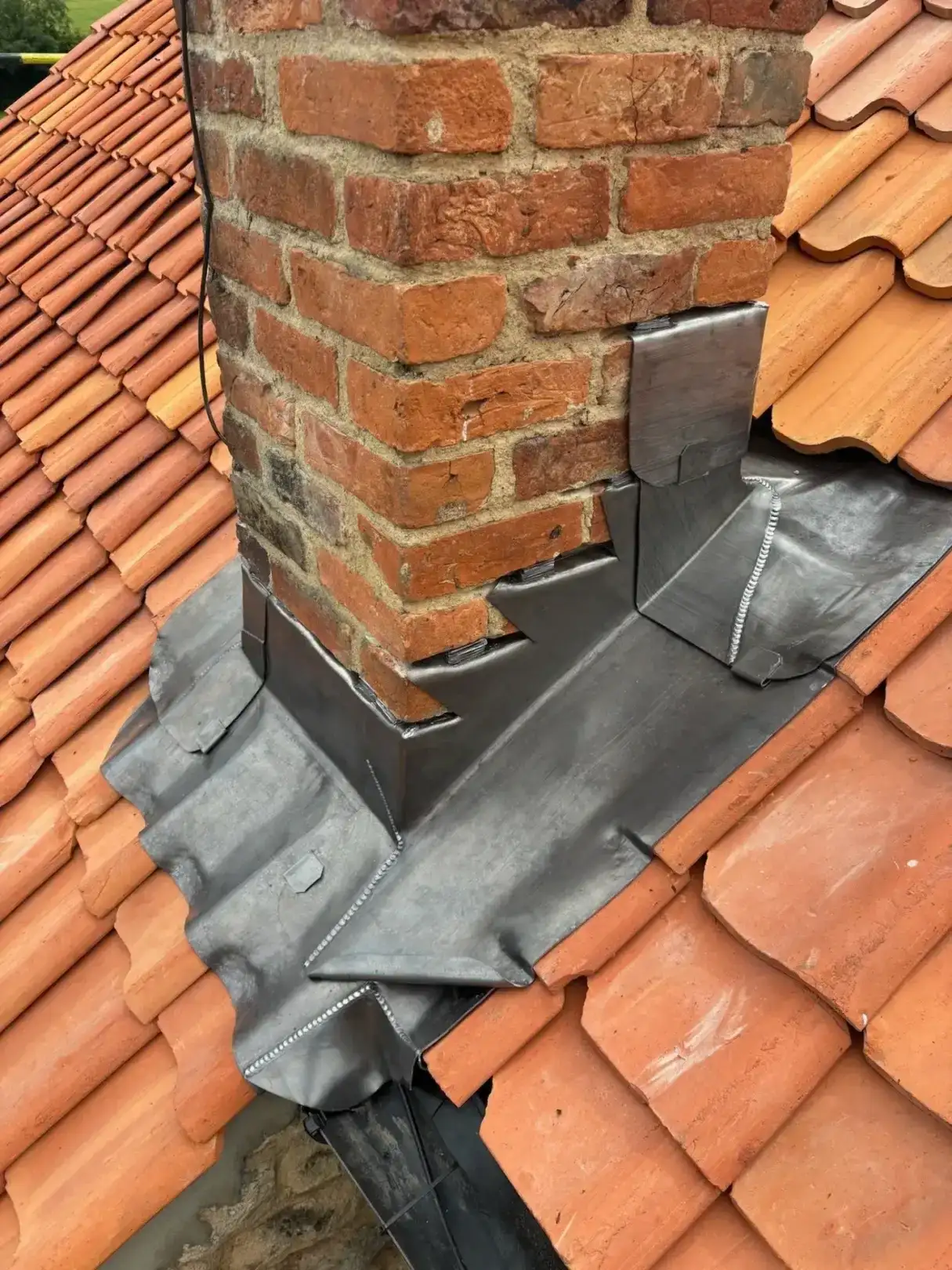
Roof York
Lead Flashing Services
Protect your roof with expert lead flashing installation and repair.
At Roof York, we specialise in the installation, repair, and replacement of lead flashing systems across Yorkshire. With decades of experience working on traditional, heritage, and modern buildings, we offer a complete service that ensures your roof remains watertight, compliant, and built to last.
Whether you’re protecting a dormer, chimney, parapet, or abutment wall, our leadwork is carried out to the highest standards—meeting both BS 6915 and the Lead Sheet Training Academy (LSTA) guidelines.
Get In Touch
Lead Flashings
Lead is an important materials for flashings.

Lead Ridge Saddle
Weathers the interface at an abutment.
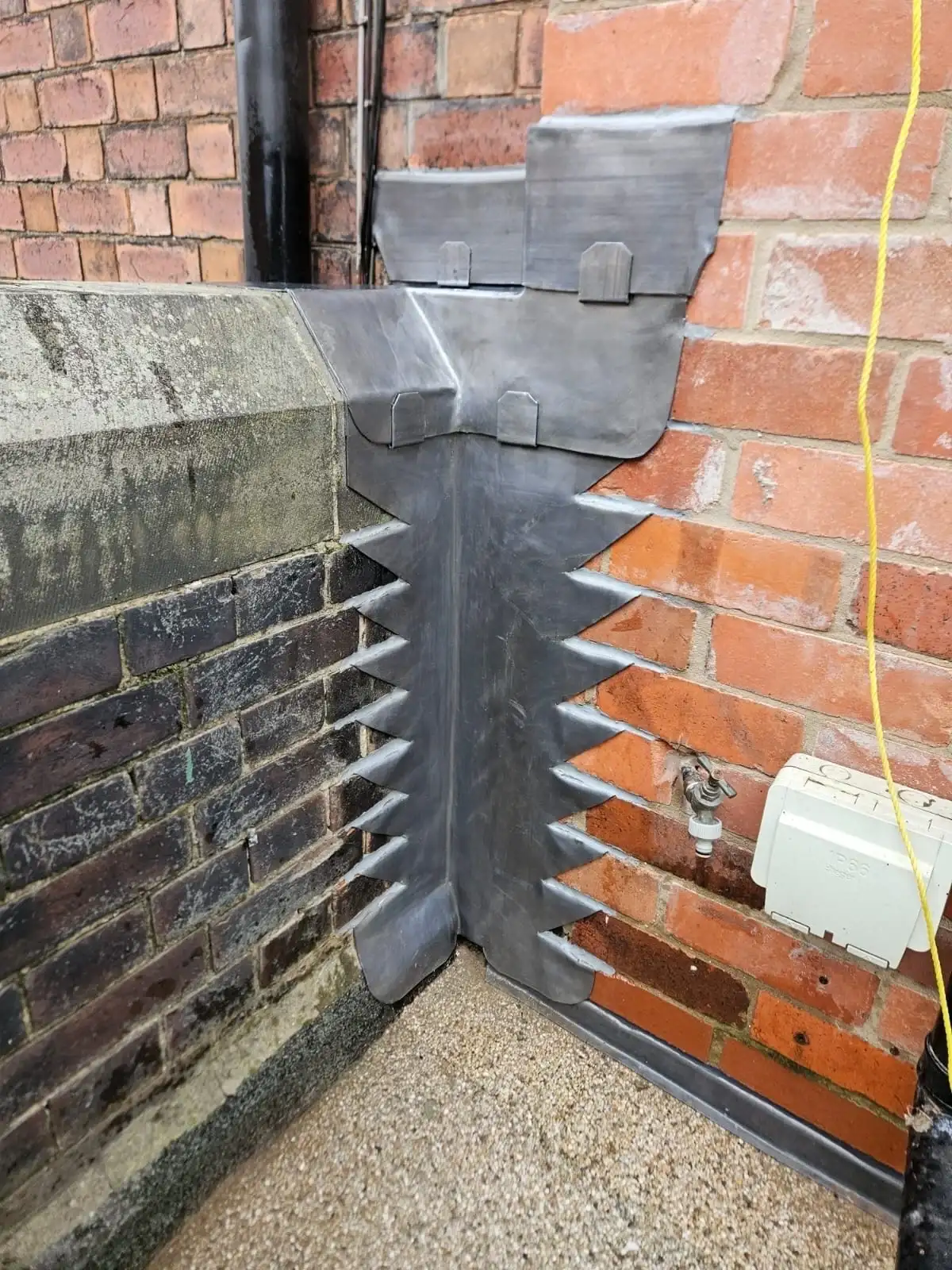
Lead Apron
Often used where two areas meet.
Lead Flashings
✅ What Is Lead Flashing?
Lead flashing is a key roofing component designed to seal joints between different materials and create watertight transitions on roof coverings. Due to its durability, flexibility, and malleability, lead remains one of the most reliable materials for protecting vulnerable roof intersections.
Lead flashing is commonly installed at:
- Chimney stacks
- Roof-to-wall abutments
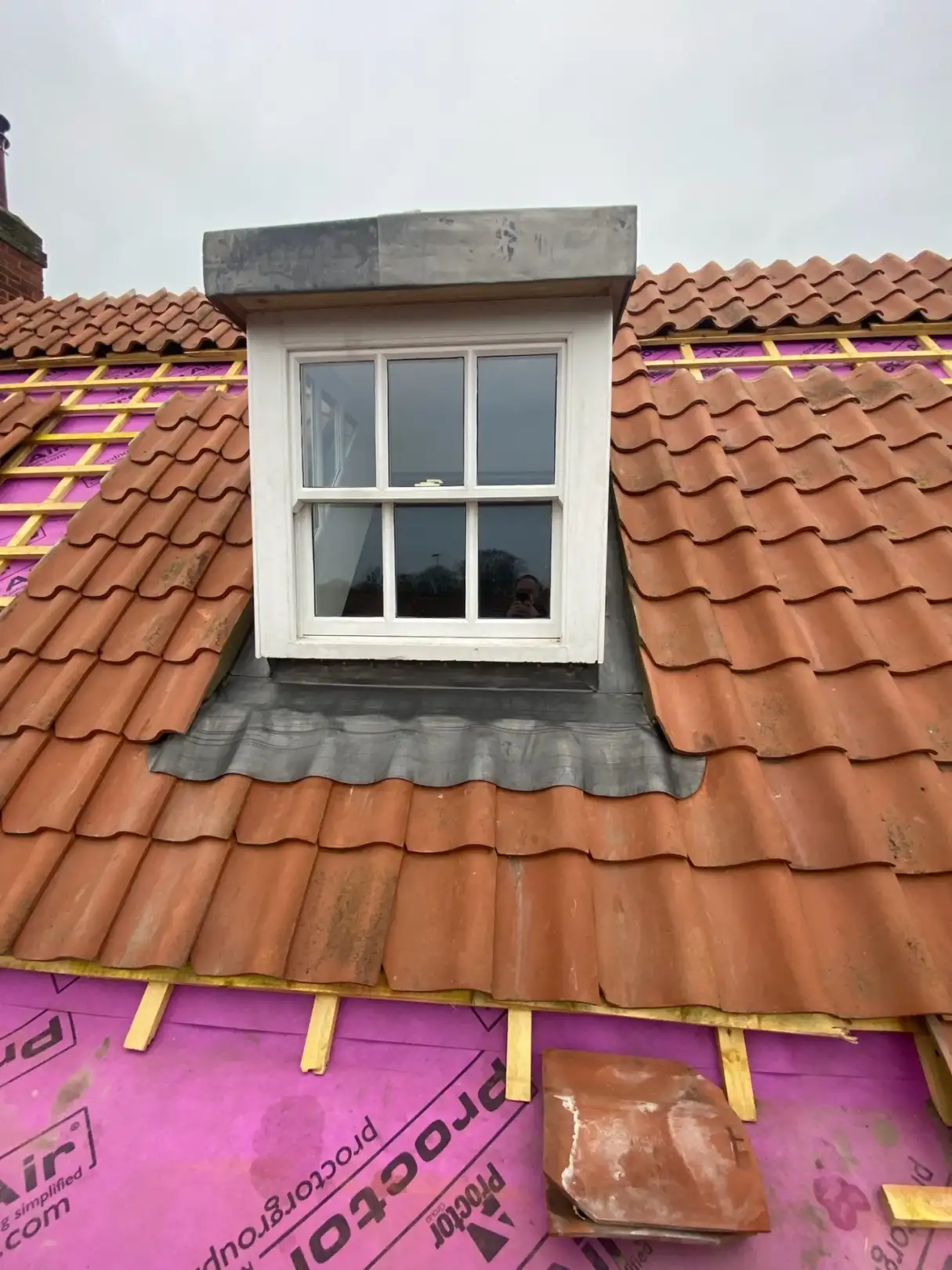
- Dormer cheeks and roof junctions
- Parapet walls and coping stones
- Valleys and gullies
- Skylight and rooflight perimeters
- Around bay windows or porch roofs
When installed correctly, lead can last in excess of 80–100 years, offering unmatched longevity and performance.
🛠️ Types of Lead Flashing We Install
Roof York provides a full range of lead flashing solutions, including:
| Type of Lead Flashing | Application |
|---|---|
| Step Flashing | Installed into mortar joints of brick or stonework alongside roof pitches (e.g., on chimney abutments) |
| Apron Flashing | Seals the base of chimneys, dormers, and parapets where the roof covering meets a vertical face |
| Cover Flashing | Used to overlap and protect lower flashings or where double-layer protection is needed |
| Saddle Flashing | Protects the corners of chimney stacks or parapet walls where two pitched surfaces meet |
| Parapet Flashing | Applied at the top of parapet walls, often in conjunction with a coping system |
| Lead Soakers | Hidden elements under tiles or slates to divert water away from penetrations |
| Lead Back Gutter | Runs behind chimney stacks to catch and channel water from pitched sides |
We also provide lead cladding, lead box gutters, and lead valleys as part of complete roofing and heritage detailing packages.
Roof York – Yorkshire’s trusted name in professional lead flashing and leadwork services.
Built to standard. Finished to perfection.
📏 Standards and Best Practice – BS 6915 & LSTA
All lead flashing work carried out by Roof York complies with:
🔹 BS 6915:2001 – Design & Installation of Fully Supported Lead Sheet Roofs and Flashings
This British Standard sets out the criteria for:
-
Correct detailing of flashings, valleys, gutters and soakers
-
Joint spacing and lap dimensions
-
Ventilation provisions to reduce underside corrosion
-
Methods of fixing and support
-
Material codes and thickness based on application
🔹 Lead Sheet Training Academy (LSTA) Guidelines
The LSTA (formerly the Lead Sheet Association) provides definitive guidance on traditional and modern leadworking practices. We follow their technical recommendations including:
-
Recommended lead codes (thicknesses) for different applications
-
Use of fixing clips, underlays, and expansion joints
-
Avoidance of excessive lengths to prevent thermal cracking
-
Proper use of patination oil to protect against white lead carbonate staining
We also specify building paper underlay beneath all leadwork to separate it from roof surfaces and reduce corrosion risk.
🧰 Materials and Craftsmanship
We only use Rolled Milled Lead to BS EN 12588, which guarantees uniform thickness and grain structure.
Typical lead codes (thicknesses) used:
- Code 3 (1.32mm) – Soakers
- Code 4 (1.80mm) – Flashings and abutments
- Code 5 (2.24mm) – Gutters and larger flashings
- Code 6–8 (2.65–3.55mm) – Box gutters, parapets, and large cladding details
Our work is always finished with correct fixings, expansion joints, and dressed detailing for professional appearance and lasting performance.
🧱 Leadwork for Heritage and Listed Buildings
Lead has been used in roofing for centuries—and remains the material of choice for heritage work due to its longevity and authenticity.
Roof York offers:
-
Heritage-accurate detailing for listed buildings
-
Mortar-free joints where required (lime or mechanical fixing methods)
-
Access to conservation-grade rolled lead
-
Reclaimed leadwork re-integration when specified
-
Experience liaising with Conservation Officers and planners
We are proud to help maintain the historic fabric of Yorkshire’s buildings with sensitive and skilled lead repairs and restorations.
🛑 Warning: Common Issues with Poor Lead Flashing
Incorrectly installed or inferior leadwork can result in:
-
Cracking due to lack of movement allowance
-
Corrosion from underside contact or water traps
-
Poor adhesion or fixing into joints
-
Staining on stone, brick or render
-
Water ingress behind roof coverings
We frequently rectify poor-quality or unqualified leadwork across Yorkshire. Don’t risk damage to your home—choose certified, experienced tradesmen like those at Roof York.
🧼 Maintenance and Repairs
Leadwork requires minimal maintenance, but we recommend:
-
Annual inspection for movement, splits, or fatigue
-
Removal of moss, debris, and leaf build-up
-
Application of patination oil to prevent staining (especially during the first year)
-
Prompt repair of cracked, torn or displaced flashings
Roof York offers leadwork condition reports and planned maintenance programmes for commercial and residential clients.
📍 Lead Flashing Services Across Yorkshire
We serve clients throughout the region, including:
- York
- Harrogate
- Leeds
- Selby
- Malton
- Wetherby
- Ripon
- Thirsk
- And surrounding towns and rural areas
Whether you’re upgrading a modern roof or repairing a historic landmark, we provide safe access, clear quotations, and expert execution.
📞 Book a Survey or Quotation
If you suspect failed lead flashing—or are planning a new roof or refurbishment—speak to the leadwork specialists at Roof York.
We offer:
- Detailed surveys with photographs
- Full specification and costed options
- Compliance with BS 6915 and LSTA best practices
- Traditional and contemporary detailing options
📞 Call us today for a no-obligation quote
📧 Or complete our online enquiry form